


March Madness is Here: Round of 64 Previews

By: Dillon George
March 18, 2026
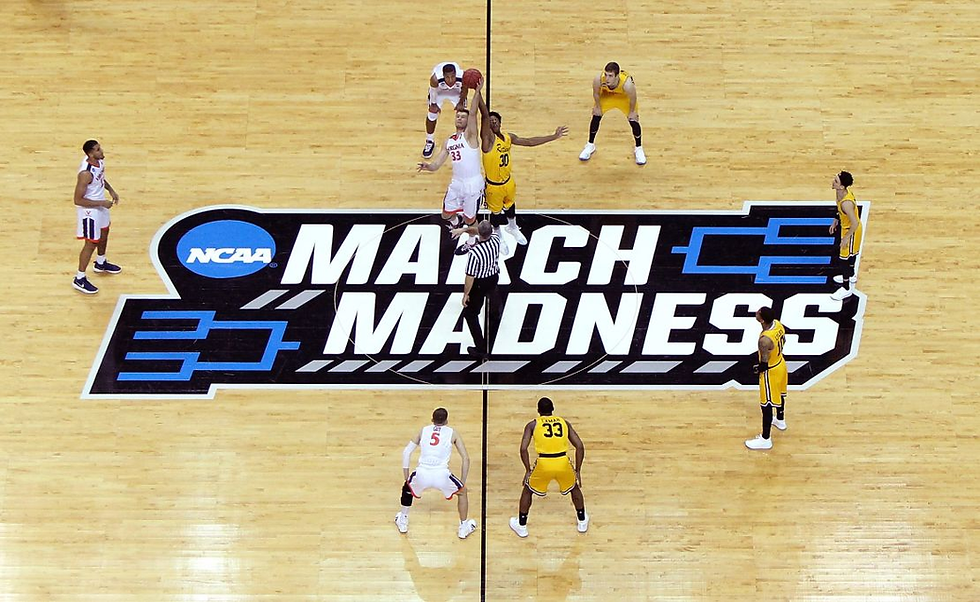
Photo Credit: CNN
EAST REGION
Duke (1) vs Siena (16)
Duke: Questions surrounded Duke heading into the ACC tournament as the #1 overall seed was left without their starting point guard, Caleb Foster, and backup center, Patrick Ngongba. Those concerns were put to rest as the Blue Devils conquered their conference foes, cruising to a 32-2 record come tournament time. Led by POY front runner Cameron Boozer, this team is elite offensively and defensively. They grab rebounds and are incredibly efficient from the floor. While they don’t excel from deep (109th in 3P%) or turn you over (175th in steal %), the offensive firepower and team defense is enough for this team to win a title.
Siena: The MAAC champions out of Albany will have their hands full on Thursday. The Saints have some size in 7 footer Riley Mulvey, and also rank 26th nationally in roster continuity, but they’ll need much more than camaraderie to beat the Blue Devils. Their shooting defense is pretty solid, ranking 55th in eFG% against and 47th in 2P%, which could play to their strengths against this Duke team. Sophomore Gavin Doty has played the 13th highest percentage of his team’s minutes of all D1 players this year, look to him to have an otherworldly performance for Siena to have a chance.
Stat to know: Duke ranks 287th and Siena 319th in pace. Slow paced games can lead to higher variance, if Siena can limit Cameron Boozer, look for the Saints to cover the 30 point spread.
Ohio St (8) vs TCU (9)
Ohio State: The Buckeyes offense is led by the backcourt duo of Bruce Thornton and John Mobley Jr., who drive most of Ohio State’s scoring and playmaking. Alongside them, Devin Royal and Christopher Tilly add additional scoring options, giving the Buckeyes a solid offensive core. Ohio State ranks 16th nationally in eFG% and 54th in 3P%, relying on efficient shooting and guard play while operating at a below-average pace. Defense is more of a concern. Despite Tilly’s size at 7 feet, the Buckeyes rank near the bottom nationally in both block % and steal %, struggling to force turnovers or protect the rim consistently. If opponents can limit Thornton and Mobley on the perimeter, Ohio State can have trouble generating offense.
TCU: A team with arguably the highest high (beating 1 seed Florida) and lowest low (losing season opener to 193rd ranked New Orleans), it’s hard to predict the Horned Frogs success. They do not shoot the ball well at all (201st and 223rd in eFG% and 3P%) but make up for it with the 22nd rated defense in the nation. They do a good job turning teams over and limiting fouls. In order to knock off the Buckeyes, I imagine they’ll have to overwhelm Bruce Thornton and John Mobley on the perimeter, and extend possessions on the offensive glass (63rd nationally). TCU will have to start making shots if they want to have a chance in this battle.
Stat to know: TCU ranks 347th nationally in A/FGM on defense. Even if he’s not scoring, expect Thornton to get downhill and distribute to other Buckeyes to make shots.
St John’s (5) vs Northern Iowa (12)
St John’s: Rick Pitino’s Red Storm bring a physical, frontcourt-heavy style led by Bryce Hopkins, Zubi Ejofor, and Dillon Mitchell. They attack the glass (24th in ORB%) and draw fouls (33rd in FTA/FGM), using their size and physicality to wear teams down. Shooting is not their strength (197th in eFG%, 199th in 3P%), and they rarely rely on the three ball, preferring to win through toughness and inside scoring. Defensively, Pitino’s group is elite, ranking top 50 nationally in most shooting categories while forcing turnovers at a strong rate. Their biggest vulnerability is defensive rebounding, however UNI ranks 356th in that regard.
Northern Iowa: The Panthers are a fascinating matchup to St John’s. They prioritize half-court execution and limiting possessions. They shoot efficiently (65th in eFG%) and take excellent care of the ball, ranking near the top nationally in avoiding non-steal turnovers. Senior guards Trey Campbell and Max Weisbrod lead a veteran offense that rarely beats itself. Defensively, UNI is excellent at contesting shots, ranking 23rd in eFG% allowed and an elite 3rd nationally in 3P% defense. Unfortunately for them, that may not come into play against this Johnnies offense that lives inside the arc.
Stat to know: UNI ranks 3rd nationally in roster continuity and plays the 3rd slowest pace in D1. Forcing St John’s to slow down and run half court offense could make things interesting in this tilt, but I worry this is a really bad draw for the Panthers.
Kansas (4) vs Cal Baptist (13)
Kansas: The Jayhawks are of course headlined by freshman stud Darryn Peterson, but Bill Self’s team has learned to play without him during injuries. Tre White and Melvin Council can pour in points offensively while Flory Bidunga and Bryson Tiller man the middle on defense. Their shooting splits are nothing crazy, all around 150th nationally, but defensively they rank 4th overall in eFG% against, and 6th overall in block %. When they lose, their offense stalls, and the Jayhawks overall are in a bit of a rut, losing 5 of their last 9. As they say though, defense wins championships, and this squad has all the pieces to turn off the Cal Baptist engine.
Cal Baptist: The Lancers are here in large part due to a Utah Valley missed dunk in the witching hours of Saturday night. Get to know this name: 5’10” senior guard Dominique Daniels. The shifty guard can get down hill and draw fouls, and is the prototype of a haymaker in March. Other than him, however, this team is not good at offense, simply put. They don’t make shots (302nd in eFG%) and turn the ball over (278th in TO%), however do rank 11th nationally in grabbing offensive rebounds. Lucky for them, Kansas does not turn you over and also does not do an amazing job at protecting the glass.
Stat to know: Darryn Peterson ranks 5th in % of teams’ shots taken. Dominique Daniels ranks 11th. We could see a battle for the ages here between phenom guards, although Daniels will have to navigate the defensive trio of Peterson, White, and Council IV.
Louisville (6) vs South Florida (11)
Louisville: The Cardinals offense runs through freshman guard Mikel Brown Jr., who is used in over 30% of the team’s possessions. Louisville takes 51% of its shots from deep (4th nationally), making them a classic live-by-the-three, die-by-the-three team. When shots fall, like in their 118-point explosion against NC State, they can overwhelm opponents. When they don’t, the offense can stall. Louisville plays at a fast tempo and takes care of the ball, but doesn’t get to the free throw line much and can be overdependent on perimeter play. Defensively they grade well analytically (KenPom top 30), largely by limiting second-chance opportunities, though they don’t generate many blocks or turnovers.
USF: The Bulls prefer to play fast as well, ranking 16th nationally in adjusted tempo, and rely heavily on offensive rebounding (10th nationally) to generate extra possessions. Led by forwards Izaiyah Nelson and Josh Omojafo, USF attacks the rim and gets to the free throw line often, though their shooting efficiency is well below average (201st eFG%, 236th 3P%). Defensively they are solid across the board, ranking top 80 in several categories including eFG% allowed, steals, and blocks. Their biggest concern is size, as Nelson at 6'10" is the only true interior presence in a relatively small lineup.
Stat to know: USF ORB% is the 7th highest rate in D1, Louisville ranks 31st in ORB% against. The Bulls’ ability to pull off an upset could lie in their ability to pull down offensive boards. Extending possessions, especially if Louisville’s threes are falling on the other end, is huge.
Michigan St (3) vs North Dakota St (14)
MSU: Although they were swept by Michigan during the regular season and lost to UCLA in the first round of the Big Ten tournament, Tom Izzo’s team still finds itself in a strong position entering March. Jeremy Fears Jr. is an elite playmaker and defender who sets the tone on both ends. Kohler and Cooper control the glass, leading Michigan State to the 4th-best offensive rebounding rate and 1st in defensive rebounding rate nationally. They are a solid shooting team, with players like Kur Teng and Kohler capable of getting hot from deep, while Coen Carr provides elite athleticism and energy. Overall, this is a well-coached, physical team anchored by a high-level point guard, and they present a tough matchup for anyone they face.
NDST: Coming in at 124th in both offense and defense in KenPom, the Bison have flown under the radar in the Summit League. They rank 83rd and 75th in eFG% and 3P%, and 6’9” forward Treyson Anderson leads them in an impressive campaign on the glass. They limit opponents to the 17th worst ORB% in the nation, so it will be fascinating to see who wins the battle in the paint. NDST both takes and shoots 3s at clips that rank 75th nationally, so they have the ability to get hot, especially with the dominant presence MSU presents in the paint.
Stat to know: NDSU ranks 255th in A/FGM against them. Jeremy Fears ranks 1st in A/FGM (by a lot, too). If he’s able to pick this Bison defense apart, it could be a long game for the Summit league champions.
UCLA (7) vs UCF (10)
UCLA: The Bruins made a splash in the Big 10 tournament, knocking off Rutgers and MSU before falling to eventual champions Purdue. Assuming Tyler Bilodeau is healthy and will play in the tournament, this offense is potent, ranking 16th in 3P% nationally. Point guard Donovan Dent is an elite playmaker as well, ranking 7th nationally in assist rate. They also take care of the ball, ranking 12th nationally in TO rate. The Bruins are experienced, and when they’re on they can beat the best, taking down Purdue, Illinois, MSU, and Nebraska while only losing by 4 to 1 seed Arizona.
UCF: A similarly volatile team, the Knights have knocked off Kansas, Texas Tech, and BYU while also having a rough 3 game losing streak to end the season. 7’2” John Bol mans the middle, however the UCF offense skews from his offensive capabilities: he ranks 7th nationally in 2P%, the Knights rank 165th. Bigger concerns come on the defensive end, where this squad ranks 235th and 187th in eFG% and 3P% against, not a good recipe vs a possible Bruins onslaught from deep. They don’t turn you over or protect the rim particularly well, and while they excel at limiting offensive rebounds (thank you Bol), that’s not something that UCLA leans on much.
Stat to know: While boasting impressive wins, UCF comes in as the 3rd luckiest tournament team in KenPom. Seemingly catching Big 12 opponents on bad nights, their lackluster defense is at mercy to a Bruin team on the rise.
Uconn (2) vs Furman (15)
Uconn: It seems as if Dan Hurley’s squad was left to their own devices up in Storrs this season. A loss early to Arizona and a lackluster Big East took national attention away from the Huskies, who slot into the 2 seed in what’s widely considered the toughest region this dance. Tarris Reed dominates down low, Silas Demary facilities, and Alex Karaban (isn’t he like 30) provides a cool veteran presence for this squad. Efficient from inside the arc (33rd in 2P%) while good-not-great outside it (105th in 3P%), this team relies on Reed to extend possessions and Demary to dish assists with his backcourt counterpart in Solo Ball. The Huskies rank 7th nationally in A/FGM. They’re even more impressive defensively, slotting in at 9th in eFG% against while blocking shots at the 9th highest rate in the country.
Furman: The Paladins are battle tested from the beginning: their first four D1 games came against tournament teams (High Point, Troy, UNI, and Queens). They’re very efficient from 2, 14th best in the nation, which balances out a not-so-scary 3 point threat (211th). Freshman point guard Alex Wilkins has the 7th highest usage rate in D1, but he dishes it as much as he shoots it, providing a dual threat option for the Huskies to keep track of. Forwards Cooper Bowser and Charles Johnson both come in at 6’11” and rank in the top 25 in 2P%.
Stat to know: Furman is the 5th tallest team in the country with an average height of 6’7”. Against a Uconn team relying so heavily on Tarris Reed, Furman has the chance to limit his impact and make things interesting.
WEST REGION
Arizona (1) vs LIU (16)
Arizona: The fourth overall 1 seed is nearly unblemished on the year, save for the two game stretch where they lost to Kansas (away) and Texas Tech (with JT Toppin). They’re tall (8th in D1 in avg height), have top 50 shooting statistics around the horn, rebound well (9th in ORB%) and back it up with an absolutely stifling defense (3rd in eFG% against, 2nd in 2P% against). Tobe Awaka himself leads the entire nation in ORB%, grabbing over 20% (!) of the Wildcats’ misses. The back court is manned by veteran Jaden Bradley and freshman Brayden Burries, each one capable of dropping 20 on any given night. If that wasn’t enough, 7’2” Motiejus Krivas stands below the rim as an ever-threatening Lithuanian. LIU… I’m sorry.
LIU: Fins…… UP! At least the energy is good for the Sharks heading into this game as I fear it will be tough sledding for the NEC champs. Rod Strickland's squad is actually pretty solid with their shooting, ranking 90th in eFG% and 51st in 3P%, however the latter of which they rarely take (see below). They do a good job of turning people over (44th in steal %), which I doubt will affect Bradley and Burries much, however the biggest worry to me is they rank 289th in ORB% against. The ability of Awaka and size of Krivas may give this team nightmares as they pull in rare Wildcat miss after another.
Stat to know: LIU ranks 355th in 3PA per game. Arizona ranks 362nd. We may see a record for least amount of threes both taken and made in a March Madness game.
Villanova (8) vs Utah St (9)
Villanova: Kevin Willard’s Wildcats play at a slow pace and rely heavily on their backcourt, led by freshman guard Acaden Lewis. The offense is fairly efficient (76th in eFG%) and takes a high volume of threes, but only shoots them at an average rate (100th in 3P%), which raises concern for cold stretches. Villanova does a good job taking care of the ball and forcing turnovers, ranking top 25 nationally in steal rate. The bigger issues come defensively. Outside of 6’10” center Duke Brennan, the Wildcats lack size, ranking near the bottom nationally in block % and struggling on the defensive glass against more physical teams.
Utah St: The Aggies are a deep and balanced offensive team, playing 10 players more than 10 minutes per game and relying on veteran guards Drake Allen, MJ Collins, and Kolby King to run the offense. They shoot extremely efficiently (15th eFG%, 10th 2P%) and take good care of the ball. Defensively they are solid across the board, allowing just 69 points per game while ranking top 20 nationally in turnover and steal rate. Their main weakness is size, as their frontcourt tops out around 6’9”, however the Wildcats have similar issues and thus don’t have the height to exploit that.
Stat to know: Both Drake Allen and Mason Falslev rank in the top 75 in steal %, while Villanova’s offense comes in at 24th nationally with how little they get pick pocketed. In a game that should come down to guard play, it will be paramount for the Aggies to force turnovers out of the young ‘Nova backcourt.
Wisconsin (5) vs High Point (12)
Wisconsin: The Badgers have grabbed national attention countless times this season from launching a barrage of deep balls and knocking off top ranked opponents (Michigan, MSU, Purdue). Guards John Blackwell and Nick Boyd are seasoned vets; Boyd was dancing freshman year with Cinderella FAU, and they’re paired with a stretch frontcourt of Nolan Winter, Austin Rapp, and Aleksas Bieliauskas, all of whom shoot 33% or better from deep. Anchored by their veteran backcourt, Wisco also ranks 3rd overall in offensive TO% and 1st in steals. After a slow start to the year, Greg Gard’s squad is rolling and poised to make a run as a 5 seed when the music starts.
High Point: It’s a really tough draw for the Panthers, who are riding red hot out of the SoCon, cruising through the conference tournament. Having not lost in over two months, this squad relies on frantic defensive possessions and quick controlled offense to dominate the turnover battle (they rank 5th in both offensive and defensive TO %). Not exceptional from deep, High Point is efficient enough from inside the arc ranking at 48th in eFG% and 32nd in 2P%. The SoCon champs also sport the 329th tallest roster in D1, so by lacking size and getting spaced out by Wisco, Boyd and Blackwell could be getting downhill with ease. As mentioned, Panthers turn defense into offense by overwhelming backcourts; Boyd and Blackwell are as tough a matchup as they come in that aspect.
Stat to know: High Point’s Chase Johnston is 0-4 from two point range. He’s 54-114 from deep. Welcome back Jack Gohlke (and the ensuing Turbo Tax NIL deal).
Arkansas (4) vs Hawaii (13)
Arkansas: The Razorbacks bring an explosive guard-driven offense led by freshman Darius Acuff Jr., one of the best players in the nation while also playing nearly 35 minutes per game and taking care of the ball with a strong assist-to-turnover ratio. Arkansas runs in transition, shoots efficiently (56.5 eFG%), and takes exceptional care of the ball, ranking 1st nationally in turnover rate (12.3%). If they meet Wisco in the Round of 32, we may see the first ever zero turnover game! Trevon Brazile anchors the interior with strong rebounding and rim protection, while eight players average significant minutes giving the Hogs solid depth. Defensively Arkansas relies on athleticism and pressure, forcing steals at the 3rd highest rate in the country, though defensive rebounding remains a weakness that can allow opponents second-chance opportunities.
Hawaii: Welcome back, Rainbow Warriors! Hawaii is a fascinating team, running through 7 foot Utah State transfer Isaac Johnson and also featuring a no-switch defense. They turn the ball over a lot, however the Razorbacks don’t get many steals to begin with. The bigger concern comes from their lack of ability to shoot the deep ball, ranking 300th in 3P%. They are one of the tallest teams in D1, presenting an interesting matchup with the athleticism of Arkansas’ interior, however their no switch defense may be completely exploited by Acuff. They force players to beat you themselves, ranking 3rd overall in opponents A/FGM, and Acuff may be one of the best in the nation at doing just that. All he has to do then is beat the seven footer at the rim.
Stat to know: Hawaii ranks 10th in opponents ORB%, while Arkansas ranks 118th in their own ability to grab boards. If they can keep Calipari’s team off the glass and create more possessions than them, they’ll give themselves a puncher's chance.
BYU (6) vs Texas / NC State (11)
BYU: The Cougars’ offense will be the driving force behind their tournament hopes. Even after losing Richie Saunders to an ACL tear, Kevin Young’s group remains efficient and balanced offensively, shooting well from the field (51st in eFG%, 43rd in 2P%) while taking solid care of the ball. Freshman star AJ Dybantsa carries a heavy scoring load, while Rob Wright provides the playmaking the offense relies on. Center Keba Keita is also key, extending possessions on the offensive glass and providing interior toughness. Defensively BYU is more volatile, ranking outside the top 150 in eFG% allowed and struggling to defend the three, though they do limit fouls and block shots at a respectable rate. If the offense stays efficient and a third scorer emerges alongside Dybantsa, the Cougars have the firepower to make noise in March.
Texas/NC State shorter due to unknown opponent: Texas is a fascinating team with a top 15 offense while their defense ranks outside the top 100. They’re incredibly experienced, ranking 4th in all of D1, and shoot the ball at an efficient rate (61st nationally). One of their biggest strengths is getting to the rim at the 4th fastest rate in the nation, aided by sophomore 7 footer Matas Vokietaitis who ranks 3rd nationally himself. They are pretty atrocious defensively though, not turning you over, blocking teams, and ranking around 300th in eFG% and 3P% against.
Will Wade has somewhat disappointed in his first year with NC State. The wolfpack have been cold of late, losing 7 of their last 9, so Wade must right the ship for a quick turnaround come Tuesday in Dayton. They’re an elite 3 point shooting team (10th nationally in 3P%), and also led by senior guards Quadir Copeland and Tre Holloman. It’ll be an interesting matchup, if NC State can keep Texas off the line and light it up from deep I like their chances, but I give BYU the clear edge over either team on Thursday.
Stat to know: Texas and NC State met earlier in November, with Texas taking the barn burner by a score of 102-97.
Gonzaga (3) vs Kennesaw St (14)
Gonzaga: The Zags have a peculiar resume, losing in blowout fashion to Michigan, upset by the mighty Portland Pilots, and then falling to St Mary’s in the regular season finale. Losing Braden Huff to injury was tough, but they relied on seniors Graham Ike and Tyon Grant Foster (combined age of 49!) to keep the ship upright. They’re very efficient and run mostly through Ike down low, having the 3rd highest distribution of points coming from inside the arc in the nation. Defensively though, they rank in the top 30 in 3P%, 2P%, and eFG%, and overall it’s hard to find a blemish on their resume. Mario Saint-Supery is a Spanish freshman who can take and make threes when needed, as well.
Kennesaw St: After losing star Simeon Cottle to a point shaving scandal, the Owls have made their noise through offensive rebounding and getting to the line. They also do an impressive job of blocking shots (13th nationally) and forcing bad twos (29th in opponent 2P%). These are interesting stats to follow as the Bulldogs run through the post as well, as they rank 46th nationally in height as well. The big issue for the Owls is that they foul at the 7th highest rate in the country. Giving the Zags free points is not a recipe for an upset.
Stat to know: Gonzaga ranks 274th in FT%. If they get cold from the stripe, Kennesaw St could keep themselves in the game.
Miami FL (7) vs Missouri (10)
Miami FL: The Hurricanes offense is led by veteran duo Malik Reneau and Tre Donaldson, who combine for about 36 points per game while giving Miami a balanced inside-out attack. Donaldson also averages around six assists per game, helping drive an offense that is efficient rather than explosive. Miami shoots respectable splits (roughly 50/33/68) and prefers a slower half-court pace where their guards can create and Reneau can score inside. Defensively the Hurricanes are solid but not dominant, ranking around 40th nationally in efficiency. Ernest Udeh Jr. anchors the interior with strong rebounding and rim protection, though Miami does not generate many turnovers and can struggle against elite perimeter scorers.
Missouri: Reneau and Udeh will have their hands full as the Tigers are the 3rd tallest team in D1. All SEC forward Mark Mitchell spends most of his time at the small forward position, which is absurd. Mizzou is a good shooting team, most of which coming from two point range, presenting an interesting battle against the rim protector in Udeh. They do turn the ball over a decent amount which is something that Miami could exploit. Overall a very experienced and physical team that will give the Hurricanes a run for their money.
Stat to know: Ernest Udeh ranks 1st nationally in eFG% and top 80 in both ORB% and DRB%. While focus may be on Donaldson and Reneau, Udeh must dominate the interior on both sides of the ball.
Purdue (2) vs Queens (15)
Purdue: The Boilermakers ended the regular season by losing on senior night, dropping 4 of their last 6, and in 7th in the Big 10. They responded by rattling off four straight and more or less dominating Michigan from wire to wire last Sunday in Chicago. In doing so, they played themselves into the #1 offense on KenPom. Led by Braden Smith, one of the best passers in the game, and TKR with his push floater, Purdue is red hot at the right time. Fletcher Loyer has had cold streaks but is still one of the best 3 point shooters in the nation, and Oscar Cluff is one of the top 5 offensive rebounders. This team has experience and played together in March a ton, and is my favorite to take this region. Sorry Queens.
Queens: The Royals are dancing in their first year of eligibility out of the ASUN. A fairly solid offensive team, they rank 15th nationally in eFG%, splitting into 68th and 13th in 3P% and 2P%. Freshman Jordan Watford shows flashes of his counterpart Smith in his ability to dish the ball, and Maban Jabriel ranks 24th nationally in 3P%. The big, no, huge concerns come on the defensive end. Queens rocks the 322nd ranked defense on KenPom, with their best defensive statistic coming in at 234th in opponent FT%, something they don’t even control. As fun a Cinderella story as this could be, #1 offense vs #322 defense is a recipe for disaster.
Stat to know: 322nd vs 1st in efficiency rating is the largest discrepancy in the entire bracket.
MIDWEST REGION
Michigan (1) vs UMBC / Howard (16)
Michigan: Suffered a tough loss in the Big 10 championship, but Dusty May and the Wolverines have their sights set on much more than a conference tournament championship. The frontcourt trio of Yaxel Lendeborg, Morez Johnson, and Aday Mara is a nightmare matchup for any team. Michigan is very efficient from inside the arc and shoots a respectable 39% from deep. Trey McKinney, Nimari Burnett, and Lendeborg can all get hot from deep, as well as the swiss army knife himself Will Tschetter off the bench. Elliot Cadeau has stepped up to lead this group, ranking in the top 40 in assist rate as well. The Wolverines’ defense ranks first in the nation, holding opponents to the worst overall eFG% in the country.
UMBC / Howard: Howard enters Dayton as a surprisingly strong 16-seed, powered by a defense that ranks well above the typical play-in team. The Bison allow just 67 points per game and sit around 30th nationally in defensive eFG%, while also forcing turnovers at a top-10 rate and ranking 19th in steal %. Offensively they struggle to shoot efficiently, but they compensate by attacking the glass (20th in ORB%) and getting to the free throw line at an elite rate (11th in FTA/FGA). Guards Cedric Taylor and Bryce Harris have been filling it up during a late-season surge that saw Howard go 11-1 in its final 12 games, highlighted by a non-conference win over CAA champion UNCW.
UMBC counters with a more balanced offensive profile led by clutch guard DJ Armstrong Jr., who has delivered multiple game-winning shots this season. The Retrievers shoot the ball efficiently (72nd in eFG%) while taking great care of it (27th in turnover rate) and protecting the rim defensively with a top-10 block rate. They play slower than average and rely on disciplined half-court execution rather than forcing turnovers. UMBC dominated its conference and enters the tournament on a 12-game winning streak, and while the résumé lacks a marquee win, they did push teams like Dayton and Georgetown in non-conference play. With experienced guards and a methodical style, the Retrievers will try to repeat the impossible from 2018.
Stat to know: Michigan opponents average the second longest two-point shot in all of D1, a testament to the presence Mara and Johnson have on the interior.
Georgia (8) vs St Louis (9)
Georgia: The Bulldogs are one of the most athletic teams in the dance, highlighted by 6’11” center Somtochukwu Cyril. Their backcourt of Marcus Millender and Jeremiah Wilkinson average out to 6 feet tall, so undersized, yet they lead an offense that takes great care of the ball (5th in non-steal TO%) and is efficient from the floor (55th in eFG%). Cyril does a great job of protecting the rim as Georgia ranks 10th nationally in block %, however they give up a decent amount of threes, and at a high quality too, ranking 169th in opponent 3P%. Georgia had a solid SEC schedule going 10-8, picking up wins against Mizzou, Arkansas, Kentucky, and Alabama.
St Louis: Josh Schertz’s squad brings one of the most efficient offenses in the country into the tournament. The Billikens rank 3rd nationally in eFG% and 2nd in 3P% (40.5%), while shooting nearly 59% on two-point attempts, giving them elite efficiency from all areas of the floor. Led by center Robbie Avila and a balanced roster where seven players average nearly double figures, the Billikens push tempo (21st nationally) and overwhelm teams with constant scoring options rather than relying on a single star. Defensively they are just as impressive, ranking 2nd in defensive eFG% and 8th in opponent 3P%, while limiting offensive rebounds. They are very complete for a 9 seed: an offense that scores efficiently and a disciplined defense that forces opponents into difficult shots. The only real question mark is late-game shot creation, and the “skid” the Billikens are on having gone .500 in their last eight games.
Stat to know: Somtochukwu Cyril ranks 10th nationally in block %, while St Louis averages the shortest two point shot distance in all of D1. Cyril has the opportunity to really disrupt the Billiken offense, although they’ve proved they can rely on outside shooting if need be.
Texas Tech (5) vs Akron (12)
Texas Tech: This offense definitely took a hit with the loss of JT Toppin, but the Red Raiders still have multiple scoring options. Le’Juan Watts, Christian Anderson, Donovan Atwell, and Jaylen Petty can all get hot, and Tech remains one of the best three-point shooting teams in the country, ranking 5th nationally from deep. Atwell in particular has been extremely efficient, ranking top 15 nationally in both eFG% and true shooting. Defensively the Red Raiders are solid but nothing crazy, ranking 33rd in KenPom, with respectable shooting defense but little disruption in terms of turnovers or offensive rebounds allowed. One notable strength is their ability to limit assisted baskets (6th nationally in A/FGM allowed), forcing opponents into tougher isolation shots. Grant McCasland’s team is battle tested from the Big 12 and capable of making noise, but the loss of Toppin and a three-game losing streak entering the tournament raise concerns about their interior presence and overall momentum heading into March.
Akron: The Zips are fresh off their 3rd straight MAC tournament championship and March Madness autobid. They rank a ridiculous 8th, 14th, and 12th in eFG%, 3P%, and 2P%, meaning they can keep pace with the Red Raider offense. On the flip side, however, they give up a lot of high quality three point looks, an aspect of the game I’d expect McCasland to take advantage of. They return a ton of experience from previous March Madness rosters, and are also riding an elite win streak. They lost to Miami OH on January 3rd and proceeded to win every conference game since, including the tournament, with a sole loss coming to an elite Troy team in the Sun Belt x MAC challenge.
Stat to know: As mentioned above, Texas Tech ranks 3rd in 3PA/FGA while Akron ranks 253rd in opponent 3P% and 304th in opponent 3PA/FGA. Their defense is designed to give up threes, which the Red Raiders could take advantage of.
Alabama (4) vs Hofstra (13)
Alabama: Quite literally while writing this, Bama’s second leading scorer Aden Holloway was arrested in Alabama for marijuana possession. I hope everything is okay with him and the Crimson Tide, but with that said, take this with a grain of salt.
Alabama plays at a blazing fast pace, 4th in the country, while also taking impressive care of the ball. They’re efficient from the floor, and while they have better ranks nationally from 2 vs from 3, they lead the nation in 3 point attempt rate at 54% (Hollaway is the team leader and 40th nationally from deep at 44%). While a very solid defense, the Tide actually rank nearly dead last in TO%, a surprising statistic given the frantic pace they run at. If Holloway can’t go, it puts the pressure on Labaron Philon to carry the weight of the offense. In the front court, the lack of depth draws concerns, especially after Charles Bediako was again ruled ineligible.
Hofstra: The Pride out of Long Island, coached by former Hofstra MBB member Speedy Claxton, the CAA champs sport both a top 95 offense and defense. While not spectacular on O, the Pride do rank 29th in 3P% at 37%, and rebound at the 50th best clip in the country. The more impressive statistics come on defense as Claxton’s group ranks 10th overall in opp. eFG%, including 3rd in 2P% as they force teams to take long, inefficient shots. They’ll need their bigs, ie 7 footer Silas Sunday (sweet name) to step up and affect Philon’s attacks to the rim. Their guards, Cruz Davis and Preston Edmead, were both instrumental in their CAA title run, as well as road wins of power four schools in Pitt and Syracuse.
Stat to know: Bama plays at the 4th fastest pace in the country, while Hofstra is at the other end of the spectrum at 317th. Slowing the game down and forcing Alabama to play in the halfcourt could set the Pride up to take down Nate Oats’ Crimson Tide.
Tennessee (6) vs Miami OH / SMU (11)
Tennessee: Rick Barnes’ Volunteers bring their usual physical identity into March. Offensively they are somewhat puzzling, despite talent like Ja’Kobi Gillespie and Nate Ament, Tennessee ranks just 149th in eFG% and 186th in 3P%, while turning the ball over at a high rate. What keeps the offense afloat is their dominance on the offensive glass, where the Vols lead the nation with a crazy 45% offensive rebounding rate thanks to Felix Okpara and JP Estrella controlling the paint. Defensively they are much more reliable, ranking 15th in KenPom and forcing opponents into tough shots rather than turnovers. Teams take plenty of threes against Tennessee, but they rarely make them, and the Vols consistently limit second-chance opportunities.
Miami OH / SMU: The RedHawks come in as one of the hottest teams in the country and are driven almost entirely by their offense. Miami ranks 5th nationally in eFG%, including 2nd in 2P% and top-30 in 3P%, making them one of the most efficient shooting teams in the field. They play at a moderately quick tempo and take great care of the ball, though they rarely extend possessions on the offensive glass. Defensively they are more average, ranking outside the top 100 in KenPom and struggling with rim protection and fouling. Still, strong shooting and continuity (7th nationally in minutes continuity) have helped fuel their impressive season.
SMU is a veteran team, however just sneaking their way into the tournament after dropping 5 of their last 6 due to the injury of BJ Edwards. A strong offense that ranks 27th and 24th in eFG% and 3P%, they rely on that production to offset a lackluster defense. They give up average to below average shooting splits, with the only real upside coming at a high block rate thanks to 7’2” Samet Yigitoglu.
Stat to know: SMU’s defense allows the 11th most 3PA/FGA in D1 while Miami OH ranks 22nd nationally from deep. Most likely to be forced out of the paint by SMU’s size, the Redhawks must take advantage of the open looks they’ll get.
Virginia (3) vs Wright St (14)
Virginia: Ryan Odom’s Cavaliers are built around a dominant interior presence and elite shot defense. Offensively UVA is solid if unspectacular, ranking 59th in eFG% and shooting 36% from three, while generating extra possessions with strong offensive rebounding. The frontcourt trio of Thijs de Ridder and seven-footers Johann Grunloh and Ugonna Onyenso anchor the paint on both ends. Freshman guard Chance Mallory runs much of the offense, which can lead to turnover issues at times, but wings Malik Thomas and Jacari White provide scoring punch. Defensively Virginia is outstanding, ranking 2nd nationally in eFG% allowed and 5th in 2P% defense, forcing opponents into difficult shots around the rim while protecting the paint at an elite level.
Wright St: The champs out of the Horizon League, Wright State enters as a dangerous offensive team capable of making games uncomfortable for higher seeds. The Raiders rank top 30 nationally in field goal percentage and have multiple players capable of getting hot, with four regular rotation players shooting 34% or better from three. They are balanced offensively rather than relying on one star, and freshman Michael Cooper has emerged as another scoring option. Wright State’s defense is less reliable, ranking outside the top 150 in efficiency, though they do a good job limiting opponent three-point attempts. After playing several strong nonconference opponents competitively, the Raiders enter the tournament in good form, winning 7 of their last 8 games.
Stat to know: Wright St ranks 59th in eFG%, but UVA counters that with the 5th best eFG% against in the country. That stifling Cavalier defense may snuff out a Raiders upset push before it can even get going.
Kentucky (7) vs Santa Clara (10)
Kentucky: It was rumored that Mark Pope had the largest NIL payroll in the nation when constructing this Wildcat roster, but you wouldn’t tell by looking at their record. The numbers are arguably better than the 21-13 record - 39th in KenPom O and 27th in D - coming mainly from their ability to take care of the ball and convert in the interior. At just the 102nd best eFG% in the country and 167th from three, this team may struggle to light up a struggling Bronco defense opposite them.
Santa Clara: Santa Clara returns to the tournament for the first time in three decades thanks to an efficient offense that finished top 20 nationally. They shoot the ball well overall, particularly inside the arc, and extend possessions at a high rate (19th in ORB%). Santa Clara does take a large share of its shots from three, though they convert at only an average rate, and a major weakness is their inability to get to the free throw line, ranking 360th nationally in FTA/FGA. Defensively the Broncos are more vulnerable, ranking around 80th in efficiency while allowing high-percentage looks and fouling frequently. While the offense is capable of keeping games competitive, questions about defensive consistency and tournament experience make the Broncos a difficult team to trust against a physical high-major opponent.
Stat to know: Kentucky ranks 189th in steal % on offense, while Santa Clara ranks 17th in their ability to take the ball away. The Broncos athleticism matches up well with the individual playmaking abilities from Kentucky, setting them up for an upset.
Iowa St (2) vs Tennessee St (15)
Iowa St: Fresh off the heels of loss in an all-time classic game on Friday vs Arizona, the Cyclones are primed to make yet another push at a March Madness title. They shoot the lights out of the ball ranking 20th in eFG% and 12th from 3, in large part to Milan Momcilovic. They play at a quick pace on offense and very slow on defense, turning over opponents at the 4th best rate in the country. While not making any dumb mistakes on offense, T.J. Otzelberger’s team does turn it over at an above average rate, 227th in the country. Still, between national POY candidate Joshua Jefferson down low, Momcilovic raining in threes, and veteran guard Tamin Lipsey at the helm, this Iowa State team can beat you in so many different ways.
Tennessee St: The autobid out of the Ohio Valley Conference, Tennessee State brings a fast-paced style of ball into the tournament, ranking 36th nationally in tempo. Offensively they extend possessions well (50th in offensive rebounding rate) and thus get most of their points inside (34th in points from two-pointers). Travis Harper II and Aaron Nkrumah have been the primary scoring threats all season, while Dante Harris has delivered several big performances as well. Defensively the Tigers could pose a threat to Iowa State, forcing turnovers at a high rate (24th nationally in TO% and 12th in steal rate), which helps compensate for otherwise average shooting defense. Iowa State can be prone to turnovers, so if Tennessee State creates extra possessions through steals and offensive rebounds, they have the style capable of making them uncomfortable.
Stat to know: Milan Momcilovic shoots an absurd 49.6% from deep, 2nd in the country and 1st among those with over 100 attempts. The gravity he’ll draw will leave room to operate for both Lipsey and Jefferson to go to work.
SOUTH REGION
Florida (1) vs Prairie View A&M / Lehigh (16)
Florida: The reigning champs battled their way back to a #1 seed after “struggling” early on. On January 3rd they were 9-5, 0-1 in conference. Entering the tournament, they’re 27-6. This success comes largely at the hands of transfer backcourt Boogie Fland and Xaivian Lee finally finding their footing with the returning trio Chinyelu, Haugh, and Condon. Florida is not an incredible shooting team, in fact they rank 324th in 3P%, but they grab more than their fair share of rebounds (2nd in ORB%), and while not exceptional at turning teams over, their physicality and size down low allows a lot of blocks and low opponent 2P%. Similar to Arizona, they’re an interesting top seed in the sense they really don’t utilize the three all that much. Regardless, I doubt either 16 seed can pull off the impossible and topple the Gators.
PVA&M / Lehigh: Prairie View A&M plays fast (23rd in tempo) and chaotic, thriving in transition and getting to the line at an elite rate (24th in FTA/FGA). Tai’Reon Joseph carried the offense early, but Dontae Horne has exploded late with multiple 30-point games since January, helping power the Panthers’ run to the NCAA tournament as the SWAC’s 8-seed. While overall efficiency numbers are modest, their improved defense during the conference tournament and up-tempo style make them capable of turning games into track meets.
Nasir Whitlock is the engine for a Lehigh team that enters the tournament 8-1 in its last nine games and is very comfortable in close contests. The Mountain Hawks rely on efficient perimeter shooting (36.5% from three, top-40 nationally) and limiting careless turnovers (12th in non-steal TO%) to generate offense. They also tend to win the free throw battle and defend the three well enough to keep games tight. If Lehigh is going to threaten a top seed, Whitlock will need help from Hank Alvey, Joshua Ingram, and Édouard Benoit to match scoring punch.
Stat to know: 6th and 3rd. Those are Reuben Chinyelu’s ORB% and DRB% rankings in the entire country. He will feast on the undersized 16 seeds, and whoever else dares get in the Gators’ way.
Clemson (8) vs Iowa (9)
Clemson: The Tigers plays one of the slowest styles in the country (333rd in tempo) and relies heavily on discipline rather than star power, with nine players logging major minutes and RJ Godfrey leading the team with just 11.5 PPG. Offensively they are solid but unspectacular (119th eFG%, 29th in turnover rate) and prioritize taking care of the ball in low-possession games. Their calling card is defense, ranking 20th nationally in adjusted defensive efficiency while limiting second chances (16th in defensive rebounding rate) and forcing opponents into inefficient shots. Clemson’s slow tempo and elite defense make them dangerous in grind-it-out games, but their limited scoring punch means they likely need games in the 60s rather than the 80s to survive in March.
Iowa: The Hawkeyes, otherwise known as Bennett Stirtz and Co., come into March Madness having lost 6 of their last 9 games. They somehow play at an even slower pace than Clemson, at 357th nationally, but are a very effective shooting team clocking in at 16th in eFG% and 2P%. They do a solid job taking care of the ball but size limitations lead to subpar rebounding numbers. Their average offensive possession length is 6th longest in the country, meaning they will swing the ball around and pass up good shots for great shots, leading to their quality shooting numbers. Defensively they’re sound, with mediocre shooting stats against but turning teams over at a 14th best rate in the nation. Teams get impatient with the slow style of play and force passes.
Stat to know: The teams have the 333rd and 357th ranked pace in D1. This will be a slugfest, and in those games I give the advantage to teams who shoot better and turn the ball over less: advantage Iowa.
Vanderbilt (5) vs McNeese (12)
Vanderbilt: Vanderbilt brings one of the most efficient offenses in the country (7th in KenPom adjO), driven by the dynamic guard duo of Duke Miles and Tyler Tanner. Both are elite scorers who also protect the ball well, helping power an offense that shoots efficiently across the board (36th in eFG% and 2P%) with shooters like AK Okereke and Tyler Nickel spacing the floor. Size is the biggest concern, with Jalen Washington the lone true big and only average offensive rebounding numbers, but the Commodores make up for it with elite guard play and experience (18th in D1 experience). Defensively they are aggressive, generating steals and blocks at high rates, though that aggressiveness leads to frequent fouls.
McNeese: McNeese presents a very different challenge with its disruptive defensive identity (48th KenPom D). The Cowboys play much slower than past Will Wade teams but still create chaos defensively, leading the nation in both turnover rate and steal rate while forcing opponents into extremely long possessions. Offensively they are less explosive (196th eFG%, 299th 3P%) but compensate by taking care of the ball (2nd nationally in steal% allowed) and extending possessions (49th in ORB%). The rebounding could be key against a Vandy team that lacks depth in their front court.
Stat to know: As mentioned, McNeese ranks 1st in TO% and Steal %. Even if Vandy can protect the ball, the nature of the Cowboys defense could force them into taking more late-shot-clock threes, an offensive scheme they aren’t built for.
Nebraska (4) vs Troy (13)
Nebraska: Still chasing their first ever tournament win, many are writing of Fred Hoiberg’s team already. The 55th offense in KenPom, “Nebrasketball” takes a ton of 3s, but makes them at only the 103rd best clip in the country. They have four guys who’ve attempted over 100 threes, including Dutchman Rienk Mast. Due to this stretch offense, the Huskers don’t do a great job of getting to the rim and drawing fouls or grabbing offensive rebounds. It’s an interesting matchup against a Troy team that plays slow and dares you to shoot the long ball. Defensively, Nebraska is much more stout, dragging out possessions and forcing opponents into a ton of catch and shoot threes and long twos. Nebraska ranks 7th nationally in 3P% against, and Troy? 219th in their own right.
Troy: A very popular upset pick, Troy is a battle-tested group that has played in four multi-overtime games, so they will not be rattled in close tournament situations. Cooper Campbell leads the backcourt and has delivered several clutch moments, while Victor Valdes contributes across the board as a point-forward capable of 15-5-5 type nights, and Thomas Dowd provides a consistent double-double presence inside. Offensively the Trojans lean heavily on perimeter shooting (45.6% of attempts from three) while also extending possessions well (55th in offensive rebounding rate). They play at a slow pace (309th in tempo) but are comfortable grinding out games and hitting timely shots. With a quality win over San Diego State and a multiple-overtime battle with USC, Troy has shown it can compete with high-major teams, I’m just not entirely sold on beating Nebraska at their own game.
Stat to know: Troy’s average 2 point distance: 4.5 feet. Nebraska’s opponent average 2 point distance: 7.2 feet. Those rank 10th and 5th, respectively. It’ll be key for the Trojans to take high quality twos against a tough Husker defense.
UNC (6) vs VCU (11)
UNC: Hubert Davis’ squad has been navigating unchartered waters after the loss of freshman star Caleb Wilson. This has resulted in a beating in Cameron Indoor to end the regular season and a disappointing loss to Clemson to start the ACC tournament. The big questions here are can seven footer Henry Veesar step up in Wilson’s absence, and can Seth Trimble and Derek Dixon man the helm in the backcourt. UNC is a solid shooting team, but not from deep. They take good care of the ball (24th in TO%) but Veesar isn’t dominant on the boards (150th in ORB%). Defensively they do a great job of not fouling and forcing tough twos, but do not turn you over and give up solid looks from deep. It’s a dangerous game against a VCU team who can launch it from deep.
VCU: Offensively the Rams are solid, coming in at 35th in 3P%. After an up and down start to the season, they’ve lost only one game since January 10th which came at the hands of St Louis. While not doing a lot exceptionally well on O, they also don’t do anything poorly, with KenPom ranks often coming in around the 100th mark. Sophomore guard Terrence Hill is an elite playmaker who isn’t afraid to get downhill, while also free to let it loose from three. There isn’t a clear edge for this VCU team on paper, but they have a history of making runs in March.
Stat to know: Lazar Djokovic, Novak’s long lost brother, is the Rams center and draws fouls at the 10th best rate in the country. UNC on the other hand fouls at the 3rd lowest rate nationally. With a lack of depth in the frontcourt, it’s critical for Veesar to continue that trend.
Illinois (3) vs Penn (14)
Illinois: The Fighting Illini have been bumped down to 2nd in KenPom offensive efficiency after Purdue’s Big 10 tournament performance. They’re the tallest team in D1 - both Ivisic brothers over 7 feet tall and Kylan Boswell as the only player under 6’6”. They take advantage of this as the 3rd best offensive rebounding team in the country, and the Ivisic brothers rank 1st and 14th in two point percentage. They play at a slow place offensively and take care of the ball, the one alarm bell to be raised is their continued efforts to chuck threes (12th nationally) while only making them at the 140th rate in the country. Defensively, they force the least turnovers in the entire country, but on the flip side foul at the lowest rate as well.
Penn: The Quakers were catapulted into the dance thanks to a 44-point performance from UVA and Duke transfer TJ Power in the Ivy League title game. In Fran McCaffrey’s first year in the Ivy League, his offense has not blown teams out of the water, ranking 225th in eFG% while still somehow ranking 11th nationally in 3P%, shooting just under 39% from deep. Ethan Roberts has also delivered several big performances this season, and AJ Levine even hit a game winner to get Penn into the Ivy title game in the first place. Although lacking in size, they do a good job on the defensive end of not fouling and forcing opponents off the three-point arc, which has helped them win close games during a 9-1 stretch over their last ten.
Stat to know: Penn ranks 11th in 3P% while Illinois gives up an above average amount of 3PA/FGA. The Quakers will need to catch fire from three to keep up with this Illinois offense.
St Mary’s (7) vs Texas A&M (10)
St Mary’s: Saint Mary’s plays the same brand of basketball it has for years: slow, disciplined, and efficient. The Gaels rely on strong shooting (14th in 3P%) and elite offensive rebounding (13th nationally) behind 7-footers Andrew McKeever and Harry Wessels, while Paulisius Murauskas and guards Mikey Lewis and Joshua Dent lead the scoring. They also lead the nation in free throw percentage, though turnovers, especially non-steals, can be an issue. Where Saint Mary’s really excels is defense (20th in KenPom adjD), limiting second chances, avoiding fouls, and ranking top-30 in all opponent shooting percentages. Their formula is simple: slow the game down, force tough shots, and execute efficiently. The biggest concerns are guard depth and experience (336th nationally), which could matter if they face heavy pressure (i.e. the Texas A&M press) in March.
Texas A&M: Buckyball is here! Bucky McMillan’s squad is the 8th most experienced in D1, and presents almost the opposite stylistic challenge of Saint Mary’s. While the Gaels prefer to grind games down, the Aggies play much faster (29th in pace) and lean heavily on perimeter offense, taking 46% of their shots from three while shooting a solid 36% from deep. Their offense is efficient (49th in KenPom O) thanks to strong ball movement (23rd in A/FGM) and solid ball security (45th TO%, 19th in non-steal TO%). Defensively they are solid but not dominant (41st adjD), relying more on activity and forcing mistakes than completely shutting teams down. The matchup contrast is clear: if A&M speeds the game up and hits threes they can disrupt Saint Mary’s methodical style, but if the Gaels control tempo the Aggies may struggle to dictate the game.
Stat to know: A&M rank 284th in opponents ORB%. McKeever and Wessels rank 2nd and 11th on their own in ORB%. With the Gael’s already slowing pace down, their ability to extend possessions will be paramount.
Houston (2) vs Idaho (15)
Houston: You could argue Kelvin Sampson’s squad took a step back after their national championship appearance last year, but the Cougars are still rock solid and in the hunt for a title. Freshman Kingston Flemings ranks 3rd in KenPom’s MVP rating, coupled with senior guards Emmanuel Sharpe and Milos Uzan. Chris Cenac Jr is attempting to fill the role of J’Wan Roberts, and Joseph Tugler is their defensive rock. They aren’t as efficient from the floor as years past, namely playing a lot of isolation ball without the option of powering it in down low, however they do take great care of the ball. Defense is still Houston’s specialty, ranking 17th in opponent eFG% and turning them over at a high rate. The biggest concerns for them are not fouling and keeping opponents off the glass. Still an elite team, but has a low floor on offense that raises concerns.
Idaho: The Vandals snuck into the big dance after winning the Big Sky as a 7 seed. They are a balanced team with multiple offensive options, making it difficult to key in on one scorer. Isaiah Brickner, Biko Johnson, Kolton Mitchell, and Jackson Rasmussen have all led the Vandals at different points, which was on display during “Starch Madness” when a different player paced them each game. The Vandals rely heavily on perimeter offense (46.8% of shots from three, 37.5% of points from deep) while taking good care of the ball (top-65 in turnover rate). Defensively they may actually be stronger, ranking solidly across most metrics and even allowing just 45 points in their Big Sky tournament opener. For Idaho to pull an upset the threes will need to fall and their interior players must stay out of foul trouble, but their depth of scoring options makes them a dangerous matchup.
Stat to know: Idaho ranks 5th in opposing ORB%. If Houston’s shooting goes cold and Idaho doesn’t let them clean up on the glass, they could keep it close in a low scoring affair.


Comments