


Hockey Sticks to Netflix: Happy Gilmore’s Sequel Tees Off at Perfect Time

By: Jonathan Karas
September 23, 2025
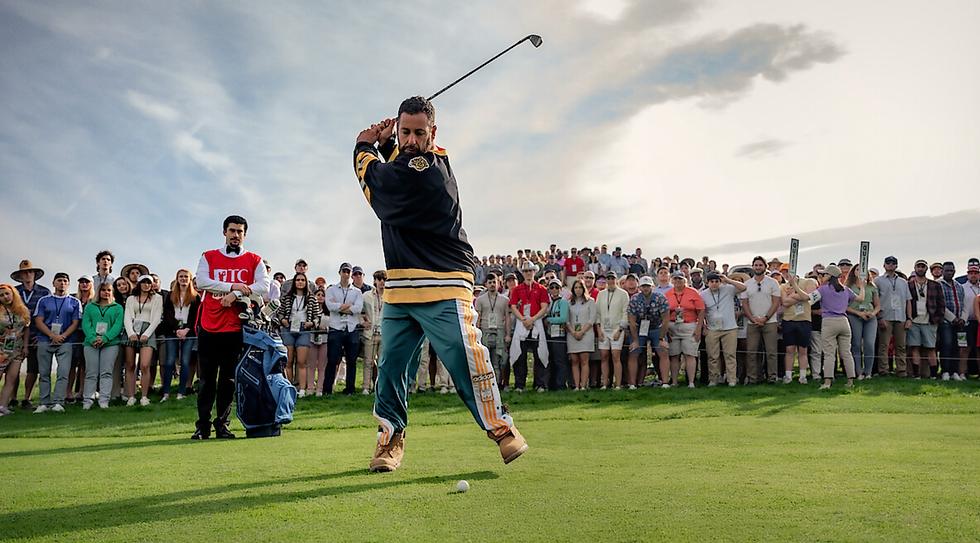
Photo Credit: Netflix
The year was 1996, and professional golf was not the public spectacle that it is today. Just about 2% of Americans polled by Gallup said that golf was their favorite sport to watch, while around 25 million people in the U.S. actually played the sport. People considered golf to be for an older, more uptight crowd, and it was not as appealing to younger audiences. Enter Happy Gilmore. The brilliant Adam Sandler starred in the original movie, focusing on a young, failed hockey player with a fiery temper (and an unconventional swing) who turns to golf to make money, ultimately winning the tour in the end. The hilarious comedy became a global phenomenon, and in many ways, helped the sport begin to appeal to a younger crowd. 29 years later, Sandler returned as Happy Gilmore in a much anticipated sequel, and the final product is an interesting discussion point not only in Hollywood, but in the sports business world as a whole.
Golf Then and Now
Since 1996, golf has surged in popularity. The National Golf Foundation reported 47.2 million golfers in 2024, which is almost double the 25 million amount from 1996. While the first movie was not the sole catalyst, it represented a cultural turning point when golf began to appeal to a broader audience.
Today, golf is truly peaking on multiple levels. CBS averaged nearly three million viewers during PGA Tour coverage in 2025, marking its most-watched golf season in seven years. For the 2025 Masters, there was an average of over 12 million viewers, which is up 30% year-over-year, and saw a peak viewership of around 19 million, which also made it the most viewed golf event in seven years. Furthermore, popular YouTube golf channels like Bob Does Sports (1M+ subscribers) and Grant Horvat (1.5M+ subscribers), along with controversy over the new LIV Golf league, have helped introduce a younger, more digitally attached crowd to the game. With all of this going for golf at the moment, re-enter Happy Gilmore.
Diving into the Movie
Happy Gilmore 2 was released at a perfect time to capitalize on the golf craze, with the sport absolutely peaking right now. While the original movie saw the ‘humble beginnings’ of Gilmore, the vibe and story were very different in the sequel. Gilmore is now an old man, grieving the loss of his wife and trying to provide for his children. He decides to return to golf after previously retiring, in an attempt to win money to be able to send his daughter to dance school. With the overall movie budget reported to be around $150 million (more than ten times the budget of the original), it is clear that Netflix was all-in on this idea as an opportunity to invest in the surge of golf.
While the original movie did feature a star-studded cast, Happy Gilmore 2 blows it out of the water. We saw cameo after cameo with celebrities spanning across multiple different industries. Travis Kelce, Bad Bunny, Post Malone, Eminem, Kid Cudi, Margaret Qualley, and Ben Stiller, among others, showed up throughout the movie. While most of these cameos were short and sweet, they were quite memorable and helped add to the appeal of the film and create even more buzz on the marketing front than there already was. This was another strategic play by Netflix to capitalize on the opportunity they had by producing the highly anticipated sequel.
The movie also featured real pro golfers, from Bryson DeChambeau to John Daly to Rory McIlroy to Scottie Scheffler to even more. While the amount of money each golfer was paid to be featured in this movie is not publicly known, some believe that these golfers were drawn in through integrated brand deals. For example, pro golfer Collin Morikawa, whose personal sponsor is U.S. Bank, had a cameo while U.S. Bank was the main tournament sponsor for the fictional tournament seen in the movie (Mygolfspy). This created a mutual promotion and overall brand alignment between one of the real-life players and their sponsor. This was a strategic move from both Morikawa and U.S. Bank to align in a blockbuster movie, which will create monetary value for both parties without actually being paid directly by Netflix.
From Finances to Fairways
U.S. Bank was far from the only major brand to be featured in Happy Gilmore 2. Subway, which was featured in the original movie in 1996, returned with a commercial partnership in the movie and a real-life “Happy Gilmore meal” at brick-and-mortar restaurants. Major golf brand Callaway was also a major sponsor in the film. Not only were they featured throughout the movie, but they too released real-life, tangible items like a limited edition putter shaped like a hockey stick, just like the one Gilmore uses in the movies. While there are no publicly disclosed financial agreement numbers, similarly to the golfers mentioned above, these brands’ involvements in the movie are likely further examples of mutually beneficial promotions. The movie getting these real sponsors and players adds credibility, while the brands receive exposure for being featured in the blockbuster film, reaching a very broad audience of viewers.
Conclusion
The release timing of Happy Gilmore 2 could not have been any better. Both viewership and participation in golf are at historic highs. Happy Gilmore 2 rode this wave, along with a wave of nostalgia and celebrity culture, to the tune of 46.7 million views over the course of its first three days on Netflix, helping make it the largest Netflix debut of the year (Variety). With the combination of the movie’s success, the overall success of golf in the world right now, and the great mutual exposure for most of the celebrities and brands featured in the film, one could say that everyone involved did indeed find their “happy place”.


Comments